Tuesday, June 15, 2010

DOG WHISPERER

"Sassy"

Australia is a nation of pet lovers and has one of the highest incidence of pet ownership in the world. Studies put the number of pets as exceeding 38 million. Of these there are 20million fish, 9 million birds, 3.75 million dogs and 2.5 million cats. 63% of Australia's 7.5 million households own at least one pet. In 2009 7.62 billion dollars was spent in the pet industry. This was more money than was spent on footwear, more than spent on the motel industry, more than spent on the beef industry and more than spent in the hairdressing industry. In the same year, over 40,000 people were employed in the pet industry.

Billy, a faithful companion for many years.

One of the most popular of all pets is the dog. Nearly half of all households in Australia own a dog and over 59% of pet expenditure is associated with dogs. Legends have arisen around the faithful dog for many years and numerous towns support statues witnessing the high esteem some dogs are held in. These include the "Dog on the Tucker Box" at Gundagai, Matey at Surfer's Paradise, the Red Dog at Dampier in Western Australia, the Guard Dog at Eagleneck on the Tasmanian Peninsula and the statue in Balmoral of Billy, a loyal pet who followed his master, a street sweeper, around for 17 years.

But dogs are not always popular with everyone. A paper presented to the Animals, Community Health and Public Policy Symposium in 1989 estimated there were some 100,000 dog attacks on humans in Australia each year. Many councils have regulations about walking dogs and removing their droppings from the street. Council rangers get numerous requests to investigate barking dogs, dog attacks on stock and dogs roaming free.

Les Treuer is no stranger to "problem dogs". Not only has he dealt with aggressive, noisy and over-friendly dogs, but he has seen dogs kill another dog, dogs kill a horse, and an American pit bull terrier jump through a plate glass window when it suffered from separation anxiety. Les is a dog behaviourist. He works for an Australian company, Dog Tech International.

Dog Tech International is a franchise company with four offices in Sydney.

Dog Tech was started in Earlwood in 1992 by John Richardson. Richardson is commonly known as the "Dog Whisperer" and now has this name registered as his trade mark. The company's headquarters are in Bowral, NSW, but they have expanded all over Australia, and to New Zealand, Singapore and Japan. They may also open soon in England, the US and India. The company specialises in understanding and changing dog behaviours which are causing a problem.

Les has had a love of dogs for as long as he can remember. His mother bought him his first dog when he was ten years old and the two became inseparable. Les spent many hours observing and trying to understand the dog's behaviour. As a result he was often asked for advice by his neighbours who wanted their dogs to "behave". Eventually Les became a construction engineer and worked in that industry until a back injury forced him to find an alternative career. He attended a course in dog training run by John Richardson and soon went to work part-time for Dog Tech. After learning about marketing and dealing with people, in 2004, Les joined Dog Tech full-time. He says he would never go back to his old job as he now works in a job which is also his passion.

Les and his dog Sassy.

Although Dog Tech does run "Puppy Schools", most of their customers come to them because they want to change some behaviour displayed by their pet dog. Owners often blame the dog or other external factors for the unsociable behaviour the dog is exhibiting. Les recalls one owner who was adamant the dog's continued misbehaviour and barking was because it had been born under the star sign of Cancer. Another insisted the microchip put into the dog was interfering with the dog's brain waves and this was causing the dog to jump up on people.

Les recalls a dog which was so scared in a storm that it broke its jaw chewing a screen door in an effort to get inside out of the storm. While Les has found some dogs suffer from storm phobia and others from separation anxiety, most "problem behaviour" is caused by the way the owners have been treating the dog. Dog Tech realises that domestic dogs have all descended from wild dogs or wolves. These wild dogs all live in packs. In the wild they have to establish their place within that pack and their behaviour is determined by knowing their place in that pack. This "pack mentality" is still present within domestic dogs and is a big determinant of behaviour. Dog Tech usually only have to spend two sessions with a dog and their owner to analyse and modify behaviour - usually the behaviour of the owner is the key.

Les says that many customers have problems with small dogs. This is probably because they are not always seen as dogs but as part of the family. Often they are pampered and spoilt. Some are dressed in shoes, clothing and even bonnets. Recently I saw a pet shop which sold a range of prams for dogs - so that the owners can push their dogs for a walk around the block! The dogs are also allowed to sleep on the lounge or even in the owner's bed. The result is that the dog thinks it is not only a family member but is running the family. Once Les sets up boundaries within the house the behaviour is usually solved. The dog born under the star sign of Cancer modified its behaviour once the husband stopped playing tug-of-war with it.

Three in every five households in Australia have at least one pet. They have these pets for companionship, recreation and protection. A 2006 report said that 91% of pet owners claimed they felt 'very close' to their pets. However many pets also end up neglected and unwanted. Many children want pets, and despite promises to look after them soon tire of the responsibility. It is not surprising then that the same report in 2006 found the main "carer for the pet is female, married with children, living in the suburbs and most likely employed".

"Deal"

Monday, May 31, 2010

CAMMERAY BRIDGE

Above is the badge from Cammeray Primary School, Cammeray, a northern suburb of Sydney. In the top left-hand corner of the badge is an image of the Cammeray Bridge, also known as The Suspension Bridge, Northbridge Suspension Bridge, Cammeray Suspension Bridge, The North Sydney Suspension Bridge and even The Long Gully Bridge. The suburb of Northbridge takes its name from the structure and it is a well known and loved landmark for those familiar with the area, however to many Sydney-siders it is a well kept secret. The bridge is a magnificent structure and the area underneath contains playing fields, boating facilities and bushwalks along the creek and through beautiful fern filled gullies.

A photograph of one of the many walking trails in the area under the bridge.

The original inhabitants in the Northbridge/Cammeray area were the Cammeraygal and Wallumedegal. Governor Phillip in a dispatch of 1790 reported: “... About the north-west part of this harbour there is a tribe which is mentioned as being very powerful, either from their numbers or the abilities of their chief. This district is called Cammerra, the head of the tribe is named Cammerragal, by which name the men of that tribe are distinguished ...". They are recorded as being a very powerful people and by far the most numerous. They were also the most robust and muscular and had the extraordinary privilege of extracting a tooth from the natives of other Bands and Tribes inhabiting the sea-coast.

The first grants of land made in the area by the crown were in 1837, however little was done until the public auction of land in 1855. One of the first settlers was Henry Hocken Bligh who bought land in 1856. He helped petition the government for the incorporation of Willoughby as a Municipality and he later became Mayor of Willoughby in 1869 and 1871. Another early settler was William Tremlow. Tremlow was a Sydney jeweller who built a house at Fig Tree Point. It was not accessible by land and he had to go to work by boat every day.

An early photo of the original suspension bridge.

The North Sydney Investment and Tramway Company was formed to take advantage of the demand for land in the 1880s. It purchased much of the land in the area around Northbridge and planned to build a bridge and tramway to open the area up and make the land more attractive as residential blocks. The bridge was designed by W H Warren and J E F Coyle and took two years and nine months to build at a cost of 42,000 pounds. It was opened for use in January 1892. The suspension span of 500 feet was considered an engineering marvel, being the fourth largest in the world at the time, and became a tourist attraction for Sydney residents who were charged three pennies a time to be taken across the bridge and back. The span was supported by steel cables, which in turn were supported by two sandstone towers and then anchored into bedrock on each side of the gorge. The deck was made of wood and designed to carry two lanes of traffic, two tramways and two pedestrian walkways.

Economic conditions in 1892 were such that the North Sydney Investment and Tramway Company went into liquidation and the tramway was never built. In 1912 the bridge was given to the Government with the conditions that the tramway be extended across the bridge and that no tollway be charged for people using the bridge. The tramway was built across the bridge in 1914 and ended in Sailor's Bay Road.

An early view of the suspension bridge.

However the bridge was used less and less and needed repairs done to it. In 1935 it was transferred to the Department of Main Roads. An inspection found that the bridge was badly corroded, this was partly due to a design fault which had water accumulating around the suspension rods, and many of the cables were badly corroded and needed replacing. The towers were in good condition and it was recognised they held considerable historical significance. The suspension bridge was replaced by an arch. The main span was 344 feet supported by two concrete ribs rising to 167 feet above the stream below. The roadway was supported on the arch by columns holding up 14 reinforced concrete beam slabs. When rebuilding the bridge a walkway was cut through the towers and the roadway widened. The new bridge was opened in September 1939.

A view of the magnificent bridge towers today.

During World War II tram services were started to Vale Street, Cammeray. This continued until 1948. In 1992 floodlighting was installed on the bridge by Sydney electricity.

A view of the bridge from the playing fields below.

The reputation of the bridge was damaged when a 37 year old man committed suicide by jumping from it. The man had narrowly missed landing on a jogger in the park below. Following the tragedy the Deputy State Coroner Hugh Dillon recommended that safety barriers be installed at the bridge. The coroner had noted that the bridge had been the site of a number of suicide and base-jumping attempts in the past.


A view of the bridge showing the barriers being erected.


The RTA investigated various designs for these barriers amidst much public discussions. A design was decided upon and the barriers are currently under construction. In the meantime security guards are patrolling the bridge 24 hours a day to discourage any further attempts to jump from the bridge.
A view of Middle Harbour.

If after crossing the bridge from the Cammeray side a person takes the first road to the right they wind down to the water at Middle Harbour and playing fields at Tunks Park. These are set in lush bushland. Walking up under the bridge a person soon enters bushland and can follow trails along the creek or wind up through the bush where they can hear birds or find small lookouts. It is the ideal place for picnics or bushwalks. I have found similar places in Melbourne around Templestowe where I have seen kangaroos and even a platypus in the river......but this is a different story.


The area under the bridge contains many well defined bush walks.


The walkway cut through the towers can be seen here. The security guards are standing inside the walkway.

Saturday, May 15, 2010

WOOLGOOLGA

Local school children take an excursion to the beach.

Woolgoolga has been called "the missing piece of paradise". Located on the north coast of New South Wales, 25kms from Coff Harbour, Woolgoolga is a popular holiday village with magnificent beaches, whale watching from the headlands, kayaking, bush walking, playing golf, horse riding, bowling, mountain biking and all the while turtles still come ashore to lay their eggs. There are numerous coffee shops, restaurants and fresh seafood outlets. The local council takes pride in providing facilities for the traveller or the holiday maker with free covered barbeques, playgrounds and the best maintained (and sweetest smelling) toilets. The local population is full of characters and are very friendly and welcoming. Woolgoolga is the centre of the bannana growing industry in New South Wales.

Prior to European settlement Woolgoolga was home to the Gumbaingirr people. The name of the town comes from the Aboriginal word "Weelgoolga" used to describe the area and the lilly-pilly trees which grew there. According to the 2006 census 159 of the inhabitants still identify themselves as indigenous.

The first European settlers were timber cutters. Although it was never one of the major centres, a mill was built there in 1883 and a long jetty for loading timber was constructed in 1892. The town was also linked to the Jesse Simpson forrest by a light railway. The jetty and the railway have both disappeared. The town was officially gazetted in 1888 as Woogoolga, but changed to Woolgoolga in 1966. There were some early attempts to grow sugar cane but these proved unsuccessful. There were also early attempts to grow banana but it wasn't until the 1930s that this industry in Woolgoolga took off.

The remains of the Buster sticking through the sand. Sometimes storms and shifting sands will reveal more of the wreck.

In 1893 the 319 ton, 39m long timber ship, the Buster arrived at Woolgoolga to take on a load of timber for shipping to New Zealand. The Buster was at anchor near the Woolgoolga jetty when a storm struck and snapped both her anchor cables. The ship was set adrift and battered by "a wall of water" for nine hours before being pushed up onto the beach stern first. The ship was never removed from the beach and its skeletal remains can still be seen jutting from the sand.

Guru Nanak Gurdwara.

In 1900 a number of Indian migrants were attracted to the area to work on the banana farms. Although most were single males who came to Australia to make money and then return home to their families many found they liked the Australian climate and countryside and they became permanent settlers. Other Indian Sikhs hearing of the community growing in Woolgoolga were attracted to the area. Today the Sikhs represent over a quarter of the population. The 2006 census lists the population of Woolgoolga at 4,356people. 421 (9.7%) speak Punjabi at home, 423 practice Sikhism and 221(5.1%) were born in India. There are two Gurdwas(temples) in Woolgoolga, the Sikh Temple Woolgoolga and the Guru Nanak Gurdwara (the Temple on the Hill). Today nearly 90% of the banana plantations in the area are owned by Sikh families. One of the biggest event in the area is the annual Curry Festival held in April. The event attracts over 10,000 people to the area.

Woolgoolga beach.

Saturday, May 8, 2010

WHERE ARE THE MERMAIDS?

Photo from: http://designdazzle.blogspot.com/2009/06/mermaid-party-ideas.html

After teaching for many years, and teaching in Special Education, I guess it is this story more than any other which sums up my philosophy of teaching. It has, and still is one of my favourite.Whenever I present professional development activities to teachers I read this to them and more often than not I get choked up by the end. It is a simple, yet powerful story from a book by Robert Fulghum, called “Everything I Ever Needed to Know I Learned in Kindergarten”. If you haven't read any of his books than I recommend them. The story:

Giants, Wizards, and Dwarfs was the game to play. Being left in charge of about 80 children 7 to 10 years old while their parents were off doing parenty things, I mustered my troops in the parish hall and explained the game. It's a large-scale version of Rock, Paper, and Scissors, and involves some intellectual decision-making. But the real purpose of the game is to make a lot of noise and run around chasing people until nobody know which side your are on or who won.

Organizing a roomful of grade-schoolers into two teams, explaining the rudiments of the game, achieving consensus on group identity -- all this was no mean accomplishment, but we did it with a right good will and were ready to go.

The excitement of the chase had reached a critical mass. I yelled out, “You have to decide now which you are: a GIANT, a WIZARD, or a DWARF”.

While the groups huddled in frenzied, whispered consultation, a tug came at my pant leg. A small child stands there, looking up, and asks in a small concerned voice, “Where do the Mermaids stand?”

A long pause. A very long pause. “Where do the Mermaids stand?” I say.

“Yes, you see, I am a Mermaid.”

“There are no such things as Mermaids.”

“Oh yes there is, I am one!”

She did not relate to being a Giant, a Wizard, or a Dwarf. She knew her category – Mermaid – and was not about to leave the game and go over and stand against the wall where the loser would stand. She intended to participate, wherever Mermaids fit into the scheme of things, without giving up dignity or identity. She took it for granted that there was a place for mermaids and that I would know just where.

Well, where DO the Mermaids stand? All the Mermaids – all those who are different, who do not fit the norm, and who do not accept the available boxes and pigeonholes? Answer that question and you can build a school, a nation or a kingdom on it.

What was my answer at the moment? Every once in a while I say the right thing. “The Mermaid stands right here, by the King of the Sea!” So we stood there, hand in hand, while the Wizards and Dwarfs and Giants rolled by in wild disarray. It is not true, by the way, that Mermaids do not exist. I know at least one personally. I have held her hand.

Photo from: www.halloweenpartystore.com/ Lil-Mermaid.php

Sunday, May 2, 2010

BRAN NUE DAE


Nearly 20 years ago I travelled from Narrabri to Moree on a bus full of Kamilaroi community members. In Moree we watched a performance of the play "Bran Nue Dae". The musical was performed on a stage which had been built outdoors on one of the ovals at Moree. That night there was a thunder storm, and although the rain held off there was thunder and lightning and the sky was ominously dark. There was a huge crowd there to watch the play, and I was one of the few 'white people' in the audience. Although I have seen many live plays this remains one of my favourite. I used to have the soundtrack on a tape but I played it so much it broke (or one of the kids cut it up?). For years I tried to get a replacement copy but it was never available. However on the 14th January this year the film version of Bran Nue Dae was released in Australia and finally I can get a copy of the soundtrack.

The original musical was written in 1990 by Jimmy Chi and Kuckles. It is set in Western Australia in 1969 and tells the story of William "Willie" Johnson who is studying for the priesthood but runs away from his boarding school in Perth intending to make his way back home to Broome so he can win back his girlfriend Rosie. Along the way he teams up with 'Uncle' Tadpole, a lovable rogue who offers to help him. Together they get a lift with some German tourists/hippies in a kombie van. Along the way they sing and dance while all the while being pursued by Father Benedictus, the head of Willies' boarding school. They run into trouble with the police, meet some unusual characters and find out about life.

The film is directed by Rachel Perkins and has an unusual lineup of stars. Willie is played by Rocky McKenzie, Uncle Tadpole by Ernie Dingo and Father Benedictus by Geoffrey Rush. Missy Higgins and Jessica Mauboy make their film debuts in Bran Nue Dae. Interestingly Ernie Dingo, Stephen 'Baamba' Albert and Ningali Lawford who play parts in the film were also in the original 1989 stage production. Magda Szubanski also makes an appearance in the film.
Though the film has recieved only luke warm comments from crictics it has been loved by audiences and won audience award for best feature at the Melbourne International Film Festival, and the People's Choice Award at the Toronto International Film Festival. Internet comments about the film are generally favourable, enjoying the period and the issues raised. Most found the film a good laugh and very light-hearted, with good hum along tunes. Those that didn't like the film mostly complained about its PG rating as the film often deals bluntly with sexual issues.


I have not seen the film yet but deliberately write this beforehand so that I won't make comparisons. After I have seen the film I will add a brief postscript.

--------------------------------------------------------------------------------------------
Well I did finally get to see the film. I loved it. It was a good reflection of the Aboriginal culture and sense of humour in the communities I have come to know. It should not be taken too seriously and was a fun musical. I play the sound track constantly and sing along in the car. Recommended.

Thursday, April 29, 2010

DOUGHNUTS: THE HOLE STORY

Some typical modern donuts.

I had heard that doughnuts were invented during the First World War as a convenient food for the troops in the trenches. The hole in the middle made it easy to quickly deliver the food to the troops by dropping them over the bayonet on the end of the rifle. However mystery and argument surrounds the origin of the humble doughnut. Archaeologists have recently discovered the petrified remains of cakes with a hole in the centre in early Native American sites in the south-west of the United States. It is not clear though how these cakes were prepared or cooked.

Most historians looking for the origins of the doughnut begin with the Dutch. The Dutch used up pieces of left-over dough by dropping them into hot oil and making little fried cakes known as olykoeks, or oily cakes. To make them more appealing they would shape these pieces of dough into little knots (dough knots) and roll them in sugar. Sometimes they were filled with prunes or raisins. Dutch colonists took the recipe for these oily cakes to America with them.

Research in action. Testing donuts so I can write about them.

Of course some Americans have a different version. In a house in Rockport, Maine there is a plaque which credits Mason Crockett Gregory with inventing the hole in the doughnut in 1847. Mason was a sea captain who probably brought the recipe for donuts home from his travels around the globe. His mother would cook them for him using spices from his cargoes of cinnamon and nutmeg, and putting a nut in the middle (hence the name 'dough nuts'). Some version of the tale have Mason making the hole so that the doughnut could be slipped over a spike on his ship's steering wheel so that both hands were free in a storm. Other versions say he didn't like the nuts his mother put in the middle and so simply pushed them out with his finger. Yet another version claims he was just cheap and saved costs by making the cakes with no centre to save dough. Mason always took credit for inventing the hole in the donut. He eventually met his end by being burnt at the stake as a witch.

Donut King - a popular donut chain in Australia.

In 1872 John Blondell was issued with the first patent for a doughnut cutter. His machine was made of wood. An improved version, made from tin, and with a fluted edge was patented in 1889.

In France in 1917 during World War 1 American troops in the front lines were served twisted doughnuts cooked by two Salvation Army ensigns, Helen Purviance and Margaret Sheldon. The pastry was rolled using a wine bottle and then cut to shape using a knife. The Salvation Army girls soon became fondly associated with the doughnut and in 1938 Donut Day was launched in the US to remember the contribution of the girls bringing comfort to the troops, and as a fund raiser for the Salvation Army. It has been celebrated annually ever since. The Salvation Army continues to serve coffee and doughnuts to police, firemen, rescue workers and disaster victims when needed.

A modern doughnut 'assembly line' machine used by Krispy Kreme.

In 1920 the first doughnut machine was invented by a Russian refugee living in New York. Adolph Levitt's machine caused the doughnut to became more popular as it was more easily made and able to be mass produced. Machine made doughnuts were presented as "the hit food of the Century" at the World's Fair in Chicago in 1934. By this time Levitt was selling over 25 million dollars worth of machines each year to bakeries.

Krispy Kreme- one of the first donut chains.

Doughnut chains, such as Dunkin Donut and Krispy Kreme have made the American version of the doughnut popular around the world, although many countries have their own local versions. In Israel a popular Hanukkah food is the doughnut filled with red jelly and covered in icing. In South Africa there is a version called the vetkoek which is served with mince, honey or jam. In India a doughnut or vada is savoury and made from dal or lentils; while in Indonesia a doughnut is made from flour and mashed potatoes and coated in icing sugar. In Japan they are made with bean paste and in Malaysia with mashed sweet cassava. My favourite is the Spanish churros, a long skinny doughnut which is served hot and dipped in hot chocolate from Juanita's in Brunswick Street, Melbourne.

A dozen 'mini-donuts' from Donut King.


Where does the word 'doughnut' come from? I have mentioned possible origins as the 'dough knot' or 'dough-nut'. An 1803 English cookbook mentions doughnuts in an appendix on American cooking. An 1808 novel talks about a meal of "fire cakes and dough-nuts". In Washington Irving's 1809 History of New York he describes "balls of sweetened dough, fried in hog's fat, and called doughnuts, or olykoeks". The first use of the alternative spelling 'donut' was in 1900 by George Peck in Peck's Bad Boy and his Pa. The traditional spelling has been 'doughnut' and this seems to continue outside of America, but the alternative 'donut' seems equally acceptable in a language as accommodating as english. As can be seen from the photos above Krispy Kreme and Donut King have different spellings for the same item.
----------------------------------------------------------------------------------
Postscript: Recently in Cammeray, Sydney I was talking with a fellow who said he had just had the best doughnuts in the world at The Colonial Bakery Milson's Point, just beside the Harbour Bridge. I talked to him about the blog and the entry on doughnuts. The following week he suddenly turned up with half a dozen doughnuts for me to try and suggested that I should visit the shop. This I did that afternoon (in the interest of research). At The Colonial Bakery Milson's Point I found a quaint little store filled with all sorts of nice cakes and their famous, award-winning pies. If you are looking for somewhere interesting in Sydney this is the place. A ferry ride, a walk along the shore under the bridge and afternoon tea and a doughnut, and make sure you say hello to Nancy Mobbs who runs the bakery. Are they the best in the world?......well I'm continuing to research this question......they were excellent, but in fairness I do have to try all the rest before making a decision.

Sunday, April 25, 2010

NEPAL

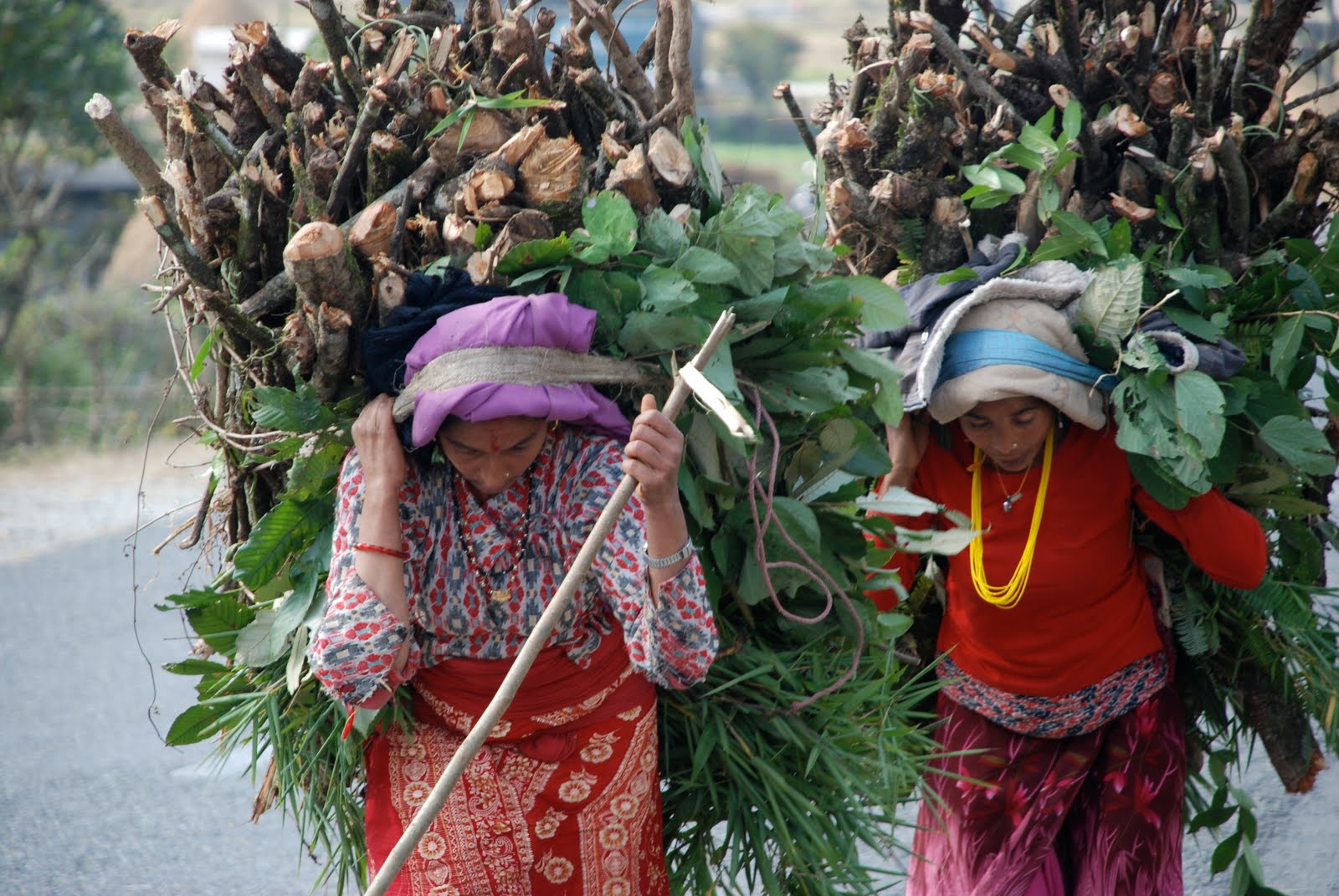
Last November I took my first trip outside of Australia. With my daughter, Amanda I travelled to Nepal and for seven weeks did volunteer work at the Everest Children's Home and then a monastery. From the moment we stepped off the plane it was confronting. The area around the airport looked like a bomb had demolished everything. Not a house looked complete or livable. People were dressed in dirty clothes and beggars knocked on the cab window. As we spent time there we realised that although there was poverty everywhere in Nepal that area was probably the worst. We saw people living on the street or in houses made from sticks and hessian. They ekked out a living any way that they could. However I also noticed something else: people were always smiling and laughing and happy.

The experience in Nepal was life changing. I am not sure how yet, but I know it was. I had two important thoughts. Firstly, how could countries which purport to be world leaders, and caring, christian nations let fellow human beings live in conditions such as this. The second, how resolute the human spirit is. Many Nepalese people live in poverty but they don't complain. They get on with life and smile and joke and laugh.

Nepal is one of the world's smallest and poorest countries. It is 853km long and 225kms wide at its widest (average 160kms wide). It starts at 91metres above sea-level and rises to 8,882 metres. It contains 9 of the world's highest 14 mountains over 7,925 metres, including Everest and Annapurna. Less than a third of the country is suitable for farming.By 2020 the population is expected to be about 34 million. In the 1960s 1 in 3 babies died and the life expectancy was just 29, today life expectancy is over 56.

It was a medieval feudal country up until the ruling Rana government was ousted in 1951. Before this time it wasn't open to tourists or outside visitors. In fact between 1796 and 1950 there are only 130 official visitors to the country recorded. The first group of tourists were in 1955. The country was really opened up in the 1960s by hippies who came for the free drugs and the easy lifestyle. Many lived in Kathmandu in tents, on what is known as Freak Street.

Prithvi Naraya Shah, a king of the House of Gorkha united the country in the second half of the 1700s. There are still older hill people who still do not realise their country is called Nepal.....they think Nepal is a small valley near Kathmandu. Only about 1/5 of the country gets electricity, and these suffer from regulkar blackouts, as we have found out. There is no centralised medical system or public works. However there is very little crime. There is pollution and smog....this comes from cement works, marble quarries and cheap petroland diesel....and causes a lot over dust over everything each day.

Nepal is also the world's only Hindu Kingdom. Hindu, Buddhism and to a lesser extent Christianity all blend together, but religion is very important and seems to permeate through everyday life.

If I had been asked 12 months ago to make a list of the countries i like to visit overseas Nepal would probably not have featured, now it probably heads the list. I think of it as a truly wonderful country, full of contrasts and wonderful people. If you would like to see more about Nepal, or about our adventures there then go to our blog: sevenweeksinnepal.blogspot.com